My Latest EP

Saturday, January 6, 2018

Best Books on Jazz (according to me...)

One of my New Year resolutions was to read more books (like every New Year), especially about jazz. So I decided to check all the books I have at home (read & unread ones), try to do a little library digging and gather all my jazz books. Obviously, I piled up a lot of books, mostly unread though:). However I thought that even with the ones I have read in the past, I could make a short list that are worth reading on this deep and interesting musical genre...

So here is my list for you...

  •  The Jazz Book by Joachim Berendt: This book has been around for ages but I believe it is still one of the best books written on jazz. Each edition comes with an update and the latest one is called "The Jazz Book from Ragtime to the 21st Century". It is fair to call it the "encyclopedia of jazz". It might be the largest selling jazz history book and considered as a reference. The writer covers jazz musicians and styles along with all other elements of jazz. If you want to get a copy be sure you get the last revision as there have been a lot of new additions. If you will read only one book about jazz, this should be it...


  • Jazz: The Essential Companion to Artists and Albums (Rough Guide) by Ian Carr/Digby Fairweather/Brian Priestly: A great introductory book to the world of jazz. As the Jazz Book, it has couple of different editions. I believe the 3rd is the latest one. The book offers many critical biographies and album reviews. It is also a good alphabetical reference and very well organized. The biographies are not merely the life stories of the artists and the emphasis is given to their contributions to the jazz scene. Also a good reference for archiving as the book includes critical recommendations on key and significant jazz albums.

  • Jazz: the Basics by Christopher Meeder: A brief introduction to jazz focusing on main artists and important jazz styles. Do not expect a comprehensive book but can easily offer you the fundamentals. You can also find a list of the 100 essential albums to own in order to build an archive or a playlist.

  • Giants of Jazz by Studs Terkel: A fantastic book about 13 great jazz musicians, their artistic lives and the times they have lived and performed. The book is probably quiet old as the writer has personally interviewed all the artists mentioned in the book such as, Louis Armstrong, John Coltrane, Billie Holiday, Charlie Parker and other great jazz musicians. You may also find some not so commonly known anectodes about the artists.

  • Jazz 101: A Complete Guide to Learning and Loving Jazz by John Szwed: The book well presents major artists, history, philosophy that shaped jazz music in the last century. Also includes information about the most important recordings.

  • Understanding Jazz :Ways to Listen by Tom Piazza: This book comes with a CD which helps the reader to digest much better what the writer has to say. It is definitely not a starter book and the emphasis is given to the explanation of how to better understand the music, form, style and instrumentation. Each chapter in the book is dedicated to a different jazz element.

  • Free Jazz by Ekkehard Jost: Especially for readers fond of free jazz and avant-garde. One of the rare books written on this specific jazz style. If you want to know more about 10 key figures/bands of free jazz (Charles Mingus, Ornette Coleman, Cecil Taylor, John Coltrane, Archie Shepp, Albert Ayler, Don Cherry, AACM, Sun Ra and the Art Ensemble of Chicago), this is a must for your library.

  • Improvisation by Derek Bailey: Derek Bailey is an English avant-garde guitarist and a leading figure in the free improvisation movement. The book highlights the improvisation concept not only in jazz but in other musical forms as well (i.e. Indian music, flamenco, baroque, rock etc). Definitely not an easy read but a valuable piece on the topic.

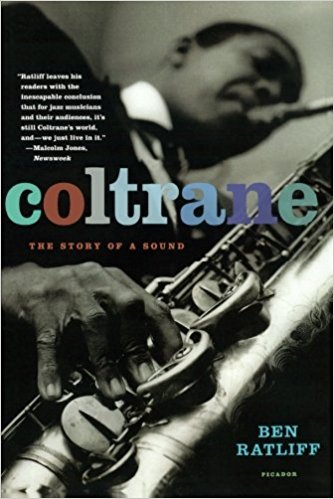
  • Coltrane: The Story of a Sound by Ben Ratliff: Written by the jazz critic of the New York Times. Focusing solely on Coltrane's life and more on his impact on jazz music. He has well depicted what is Coltrane sound, how he became who he is and his achievements. Probably the best book about the great Trane.
  • Norman Granz: The Man Who Used Jazz for Justice by Tad Hershorn: Norman Granz was the founder of Verve Records and an American jazz impresario. He is well known for his actions fighting inequality against African-American artists and trying to bring jazz to audiences all around the world. It is a portrait of a true jazz giant, maybe the most significant non-musician in jazz.

  • The Penguin Guide to Jazz Recordings by Richard Cook and Brian Morton: The reference for all the jazz recordings in history. Essential guide to recorded jazz. You can find all the jazz albums made till the date of publication (I have the 9th edition from 2008 and I did not see a more recent volume, please comment below if you come across an updated one).

  • JazzLife by William Claxton and Joachim Berendt: The best visual collection of jazz photographs reflecting legends and street musicians all over America.

Yes, a lot of reading but I assure you that these books helped me enormously to further appreciate and enjoy jazz. Hope they will be of the same use to you...

Pages from JazzLife with the music of John Zorn "The Sicilian Clan"


Thursday, January 4, 2018

A Book Review: The Sun & The Moon & The Rolling Stones by Rich Cohen

The first post of the year is about a book I read during the New Year holiday period. I might say it is one of the best books written about the Stones (that I've read of course), well maybe not as good as Keith Richards' "Life" but still a very entertaining book. It is well written and interesting because it is not a biographical book per se but a very good source to understand Rock'n'Roll and the era under the shining glamour of the Rolling Stones.


You might have heard the name of the writer, Rich Cohen, who was one of the co-creators of the HBO series "Vinyl" along with Martin Scorsese, Mick Jagger and Terence Winter. The show was staged in the 70s and revived the US musical scene from the eyes of a record executive.
He is also a contributing editor at Vanity Fair and Rolling Stone magazines.


English Version (Spiegel & Grau)


Turkish Translation (Domingo)


The writer had the opportunity to tour and travel with the band in the 90's for the Rolling Stone magazine (he was in his mid 20's by then). Therefore the reader can easily understand that he has gotten really close with the band members. I can say that this book is not a biography of the band neither gives any new information about the band. However Rich Cohen's research, stories/observations about the Rock world and the musicians he mentions in the book are quite marvelous. For me it was a book that I could not put down.

Cohen takes the reader through the Stone’s amazing history, professional highs and lows, specific albums that were of significance, personal struggles, especially those of Keith Richards, who was center stage in Cohen's mind, stealing the spotlight away from Mick Jagger. I think he believes it is Keith Richards who really reflects the soul of the band...


The fascinating thing about the book is that the writer does not tell the reader "what happened", but "how and why all those events happened".
The book also pays tribute to the ex-members of the band, especially Brian Jones and all the musicians that had an impact on the Stones' musical development such as Muddy Waters and Robert Johnson.
You can also find the "Beatles vs. Rolling Stones" comparison all over the book with their main differences based on the characteristics of both bands. All the insights why music, especially Rock'n'Roll, was so different in those years and what made those bands so great and timeless, are clearly explained by Rich Cohen.

Rolling Stones "Sympathy for the Devil"
Footage from the infamous Altamont, CA concert

So as a conclusion, for anyone who loves the Stones – read it. For music aficionados who are curious about the music and the world of the 60's and onward, give it a try. And for those who simply want to read fascinating revelations about one of the very best bands ever, this is for you, too.


Thursday, December 28, 2017

Jazz Notes IV

I guess it might be a good time now to write something about the History of Jazz, where it came from and its origins.


Before waving goodbye to 2017, the 100th anniversary of the first jazz recording, we can only try to jot down some notes on the origins of jazz as there are various commonly held beliefs that are, in my opinion, still mysterious and vague.


The Original Dixieland Jass Band’s Livery Stable Blues was the first jazz recording but their later song Tiger Rag would be more influential (Wikipedia)


Where does the word "Jazz" come from?

The word "jazz" first appeared in San Francisco Bulletin in 1913 in the articles of Edward Gleeson who was an Irish sports reporter. The word had nothing to do with music but refer to a quality possessed by the baseball players. A common belief today is that the word "jazz" comes from "jass" which was the pronunciation of an Irish word "Teas"...
The word "Teas" (pronounced jass, chass or tas) meant heat, high spirit/energy, excitement and effervescent.
It is recorded that when the baseball players wanted to drink something bubbly in their training camps, they were asking it  as "jazzy water". Gradually the word was carried to the baseball field and when the coach wanted to energize the team, he shouted "c'mon guys, lets jazz it up".
We can say that the word "jazz" was not coming from New Orleans but to New Orleans from San Francisco and this did not happen before 1917.

There are many other rumors about "jazz" like certain sexual connotation, as reference to a woman's backside. Or rumors saying that it derived from "jas" short for the word "jasmine", a scent used by the New Orleans prostitutes.

What are the roots of Jazz Music?

If we leave the etymology aside, I guess it is safe to say that jazz music was born in New Orleans. It is also safe to say that its roots go back to African and European music. But how so?

I guess African impacts can be found in the music's rhythm and feel, its "blues" quality and the tradition of playing an instrument in one's own expressive way, making it an "extension" of their human voice.

On the other hand, it is fair to say that the harmony notion or the chords accompany the music along with the family of instruments came all the way from the other side of the Atlantic.

Buddy Bolden Band

The Original Creole Orchestra 1912

New Orleans was a perfect location for jazz music to evolve because it was a melting pot of cultures, very rich in brass band music, hymns, spirituals, minstrel music and plantation chants.
During the beginning of the century, the city allowed all of these elements to come together, as it was a port city (with people arriving from all parts of the world), a meeting place for people of different ethnic groups, and a city with a nightlife where musicians had the opportunity to play together, learn from each other, and blend all of these elements.

If we could travel in time, we would make couple of stops in different parts of the city and most probably could get a perfect glimpse of the origins of jazz.

Our first stop is in a cotton field where we hear a plantation worker singing a work song as he picks cotton.These workers are probably descendants of people who were slaves before the “Emancipation Proclamation” in 1863 granted them freedom. Although by this time free, few employment opportunities other than labor were available to African Americans. Singing as they worked was a way to ease the boredom of this difficult, exhausting, boring work. These songs would eventually become part of jazz. 

I be So glad, when the sun goes down

Second stop could be in a church at a worship service. When brought to the United States, Africans were forced to abandon their religious practices and adopt Christianity. They brought with them musical traditions from Africa where everyone participated in some way. People danced, drummed, clapped, sang, or moved with the music. Listen to the call and response patterns in the music and the emotion with which the song is sung. Many of these spirituals were composed during the days of slavery so the lyrics often referred to hopes of escape and freedom. These kinds of melodies, and especially the feelings with which they were sung, would later become part of jazz. As you play the track again listen to the call and think of how you would sing a "response.". This is also the beginning of the blues.

Roll Jordan Roll from the OST of 12 Years a Slave

Now it's night time. Work is finished, worshipping is finished. Where can one be headed to? The last stop is obviously the bar where you can listen to "Ragtime", from Scott Joplin if you are lucky. Scott Joplin not only performed as an entertainer, he composed many songs called rags or Ragtime for solo piano. These compositions were published as sheet music which people purchased in order to learn to play it on their own piano. The compositions were also "recorded" on piano rolls which people purchased to be played on mechanical player pianos.

Maple Leaf Rag - Scott Joplin

And from time to time people gathered altogether at funerals which was a great location for amazing music. As we march down the Basin Street, a parade is passing by. This particular parade is for a funeral which has just left the cemetery after burying a dear friend.

Oh didn't he ramble - Kid Ory's Creole Jazz Band

So here is a very brief introduction to the origins of jazz.
I wish everyone a very happy new year. See you all in 2018...


Tuesday, December 26, 2017

Jazz Notes III

I am sure everyone familiar with jazz music hears the term "Swing" from time to time. There are two separate meanings of this word in the jazz world somewhat related to each other.
One of them defines a musical style performed  mostly by big bands that has been extremely popular mainly in the USA and all over the world in the 30s and 40s. Notable musicians of this form are Louis Armstrong, Duke Ellington, Artie Shaw, Benny Goodman, Glenn Miller, Count Basie, Gene Krupa, Tommy Dorsey and Cab Calloway.
The name of this musical form obviously derives from the "swing feel" which will be the topic of this post.


What is Swing?

"It don't mean a thing if it ain't got that swing"
Duke Ellington


What is Swing?


Any answer to the question of "What is Swing?" can only be given with the understanding of "syncopation". Swing can be summarized as a playing technique with syncopated rhythm. But what is syncopation or syncopated rhythm?


A simple description of syncopation is the creation of rhythmic surprise. This can often be done by accenting certain notes or by unevenly timing the beats. Both jazz and ragtime make use of syncopation; the name of ragtime music itself comes from its uneven or "ragged timing." When music is played as it is written on the sheet, it is played "straight", or without swinging. In other words, if what is written on the page of music are 8th notes, and you play those notes as perfectly timed 8th notes -- each having the same duration of time -- then you are playing the music straight.


Straight Rhythm

And swing refers to the creation of the feel of a forward momentum, a forward momentum that seems to want to drive the listener to dance and sway to the music. Often this is done by dividing each beat into a pair of 8th notes, but playing the first slightly longer than an 8th and then playing the second slightly shorter than an 8th, or vice versa. This is sometimes described as the first note "stealing" some of the second note's time so that they are of unequal duration. This is often called "swing time."


Swinging Rhythm


Another way the music is "swung" is by playing the just a fraction of a beat ahead of the actual beat giving the music as a whole a feel of forward momentum. On the other hand, playing just behind or slightly after the beat can give the music a relaxed feel. Music that has swing is often exciting or at least makes you want to dance.


Straight vs. Swing


Swing is probably one of the most debated term in jazz music. When jazz performer Cootie Williams was asked to define it, he joked, "Define it? I'd rather tackle Einstein's theory!". When Louis Armstrong was asked on the radio show what swing was, he said, "Ah, swing, well, we used to call it syncopation—then they called it ragtime, then blues—then jazz. Now, it's swing. Ha! Ha! White folks, yo'all sho is a mess." Benny Goodman, the 1930s-era bandleader nicknamed the "King of Swing", called swing "free speech in music. His contemporary Tommy Dorsey gave a more ambiguous definition when he proposed that "Swing is sweet and hot at the same time and broad enough in its creative conception to meet every challenge tomorrow may present."

Like so many things about jazz, swing is hard to describe in words, but when you hear it, you know it and you feel it.


Straight vs. Swing


So briefly, swing means that while keeping the beat (foot tapping) steady, rather than each note being held for the exact same length of time, the notes falling on the downbeats are held twice as long as those falling on the upbeats, making a long-short, long-short, long-short, long-short pattern and giving the music a kind of a different feel or groove.


And for syncopation, a final summary can be made as: "doing the unexpected rhythmically", something that messes with the regular flow of the rhythm. Often, this means emphasizing or accenting a weak beat instead of a strong beat. In four-four time, strong beats are on beat one and to a slightly lesser degree on beat three. Syncopation can be as simple as accenting beats two and four instead of beats one and three. So instead of one, two, three, four; you have, one, two, three, four.
If you would like more information on syncopation please google the terms "downbeat" and "upbeat"...

A good example of swing rhythm: One o'clock jump by Count Basie


A good example of straight rhythm: Chameleon by Herbie Hancock
(Pay attention to Australian bassist Tal Wilkenfeld 24 years old at that time)


Let's finish with a provocative question. Can we say that, generally speaking, American jazz musicians swing better than their counterparts elsewhere in the world (especially European jazz players)?

Please comment what you think on this question...


Monday, December 25, 2017

Jazz Notes Part II

As promised, here is the second part of my jazz notes. In this post I will try to touch the most important element of jazz called "improvisation". Being a characteristic mainly associated with jazz music, improvisation needs to be well understood in order to place jazz to its unique hierarchy among other types of music...


Miles Davis "So What"


What Is Improvisation?


"You've got to find some way of saying it, without saying it"
Duke Ellington
  • In daily routine of life, people improvise all the time. When talking to someone you do not know what you will say next, when you are dancing you do not know what will be your next step or move (not pro dancing of course), when you hear some news you do not know what your reactions will be...These are all examples of improvisation, and your actions are purely shaped on many unknowns. Similarly jazz musicians do the same with their instruments, but rather than using words to communicate, they use music; it's kind of like musical conversation.
  • Improvisation is inventing something on impulse and in response to a certain situation; in jazz, it is when musicians perform a different interpretation each time they play the same tune, i.e., a tune is never played the exact same way twice, whether played by the same musicians or an entirely different group; the improvisation becomes its own musical dialogue between band members without any preconceived notion of what the final outcome will be. It is re-inventing or re-composing a piece, or in more technical terms, it is the process of spontaneously creating fresh melodies over the continuously repeating cycle of chord changes of a tune.
  • When jazz musicians improvise, they are playing the notes that they “hear” (imagine) in their minds; they “hear” these notes just a split second before they play them (just like when you are talking, you “hear” the words in your head just a split second before you say them).
  • Jazz musicians learn how to improvise in a way that is similar to how kids learn how to talk. Young jazz musicians learning how to improvise listen to other jazz musicians improvise and try to imitate them; kids (even babies) learn how to talk by listening to others talk and trying to imitate them. Jazz musicians play their instruments a lot; kids learning how to talk, talk a lot.
    To play better, jazz musicians study instrumental technique (the physical mechanics of playing an instrument) and music theory (how notes and chords fit together); to speak better, kids study pronunciation and grammar.


Coleman Hawkins "Body and Soul"

  • In my opinion, improvisation is a separate art within an art form. Someone can be a good jazz musician but his/her improvisation skills can be inferior compared to his/her musicianship. Many people, especially non-musicians, think that improvisation is simply playing what you feel or whatever comes to your mind. This is ultimately true and is the final goal of the improviser. However, that doesn’t mean that everyone picking an instrument and playing what they claim they “feel in the moment” is improvising! Improvisation is a language and, like any language, it has structure, rules, patterns, and clichés.


John Coltrane "Resolution"


  • Normally improvisation can exist in all types of music. For example, Bach and Mozart were great improvisers of the classical music. However classical music transformed into a form where improvisation is extremely limited, sticking to play the score as written; but this led the performers to concentrate more on feelings and expressions while playing. One can also argue that rock solos are improvisations. This is partly true when you think of the licks (especially blues) of some great guitarists. Of course most of the real improvisation takes place in the jazz scene. Especially after the 1950s where jazz music has been elevated to a new level where it became a more mature, complex and a deeper form of music (obviously improvisation also existed heavily before the 50s but due to the fact that jazz being considered popular music of that period, the methods of improvisation like melody, harmony and rhythm were simpler).
  • Advanced listeners say that the best improvisation sounds as composed and the best composed music sounds as improvised. There is a huge difference between composed music and improvised music but in jazz both merge into a magical mixture and that's the beauty of jazz.
"In fifteen seconds the difference between composition and improvisation is that in composition you have all the time you want to decide what to say in fifteen seconds, while in improvisation you have fifteen seconds."
Steve Lacy
  • As a final comment as I tried to explain, improvisation is the most vital element in jazz music. Can you call a music without improvisation jazz? In my opinion, hardly...Musicians play their instruments to play with the music. And this is unique to jazz...
  • Don't forget, improvisation is: a wordless connection with the audience and the members of the group, it is some sort of meditation and a key component in jazz that makes this music form somewhat superior to listen to.
"Ahhh - those Jazz guys are just makin' that stuff up!"
Homer Simpson


Note: You can visit the links for fine examples of jazz improvisations