My Latest EP

Tuesday, January 9, 2018

A Must-Watch Film: "Chasing Trane: The John Coltrane Documentary"

Here is a great documentary on an enigmatic man that has massively influenced the world of jazz during his lifetime but more so after his death in 1967. He was truly a giant in bebop, hard-bop and free jazz in his short-lived life (he was only 40 when he passed away).

I had the chance to watch the documentary almost 2 weeks ago and since then I have been trying to gather some ideas on Coltrane, especially on his musical, political but mostly philosophical/spiritual views. Even though I had read a fair amount of books on John Coltrane, one can always discover many new things about him, especially on his political and spiritual stance. So expect a post on the great Trane when I am ready...

Back to the documentary; written and directed by talented John Scheinfeld (you might remember him from "The U.S. vs. John Lennon" film  in 2006). He returns with another great musical figure 10 years later. The film has been made with the full co-operation and participation of Coltrane's family as well as his producers and records companies. Be ready for some sentimental stories...

Throughout the film, you will see a lot of celebrities like Sonny Rollins, Ravi Coltrane (his son), Jimmy Heath, Benny Golson, Wynton Marsalis, Carlos Santana (in my opinion one of the best insights came from him), Wayne Shorter, Kamasi Washington and Bill Clinton (yes the ex-president and a good saxophonist), sharing their feelings about him. You can also hear Denzel Washington speak as Coltrane, which I believe is an excellent choice. (Here's a link how the director found him as Coltrane's voice)

The director has done a great job in portraying Coltrane and he has managed to tell the legend's personal and musical story with a good balance. One can perfectly picture him as a man and as an artist, or can well dig down his authentic political attitude and spirituality. The use of old original footage and pictures along with his musician friends' and family's comments impressed me. One amazing detail is that former US president Bill Clinton's deep knowledge about Coltrane (we miss such politicians...). At one point of the film, Sonny Rollins says that in order to understand and feel Coltrane's music, you have to experience it. I guess that is true for all great artists.

Official Trailer

One thing that has always affected me about Coltrane is that his comeback after going cold turkey from drugs and emerging as a new man, more political in his own way (mostly with music, less with words) and spiritual in his creative side. This part of his life has really been well reflected in the documentary, especially his visit to War Memorial in Nagasaki, Japan.

So briefly, the documentary is not another jazz movie. It reflects well the Coltrane spirit, his struggles against racism during his younger years (Dr. Cornel West defines the black music as a response to the traumas of the African-American society), his musical development, especially his interactions with Miles Davis, Dizzy Gillespie and Thelonious Monk, his tough drug addicted years and finally his enlightenment (I don't like this word because one can never be John Coltrane without a form of enlightenment, so let's say he was always enlightened but after quitting drugs he was enlightened to the next level).

"Alabama" composed by Coltrane in response to the church bombing in Birmingham Alabama that killed four African-American girls. It was inspired by the inflection and rhythm of a speech by Martin Luther King.


Watch it, if you like the great John Coltrane...
Watch it, if you want to know Trane better...
Watch it, if you want to witness what a great artist is.


Watch it, I promise, it will make you feel a lot better and even will make you think that there is still hope somewhere...


Monday, January 8, 2018

A Surprise Album Review: "Sketches of Brunswick East" by King Gizzard & The Lizard Wizard with Mild High Club

When I created this blog, I had promised myself not to post any album reviews as I see this task a real challenge. I strongly believe that in order to publish a proper album review, you really need to know the artist(s) and the band. There are a zillion different points to investigate, to analyze and digest in order to be able to write an album review. You need to know and understand the backgrounds, past experiences, education, psychologies, political views and philosophies of the artist or the band to make a statement about their music. Therefore I had restrained myself to publish on this field.

However I plan to make an exception and write about an album that I enormously liked and enjoyed recently. I found the vinyl album in Rough Trade East in London just minutes before closing time. 

Please note that this post is mostly for sharing the Band and the Album with you and it should not be treated as a review, because as I have mentioned I am in no position to make judgments regarding the music, album or the band itself.

I had been hearing about the band and actually had listened couple of their albums on Tidal and/or Spotify. I really don't know how but when I saw this very album on the shelves I immediately felt that this would be a bit different than their previous works and after listening I found out that I was right...


King Gizzard & the Lizard Wizard is a psychedelic band from Melbourne, Australia. They have been around since 2010. The band consists of Stu Mackenzie (vocals, guitar, keyboards, flute), Ambrose Kenny-Smith (vocals, harmonica, keyboards), Cook Craig (guitar, vocals), Joey Walker (guitar, vocals), Lucas Skinner (bass), Michael Cavanagh (drums, percussion), and Eric Moore (drums, percussion). They are an incredibly productive band and they have recorded 13 full-length albums since 2012 (5 albums only in 2017). 

The band's name was created at the last minute just before a live show. Mackenzie wanted to name the band "Gizzard Gizzard" while another band member wanted Jim Morrison's nickname "Lizard King". They eventually compromised with King Gizzard and the Lizard Wizard.

King Gizzard & The Lizard Wizard


The album I would like to introduce to you is called "Sketches of Brunswick East" and it is the 11th recording of the band. In this album the band has collaborated with "Mild High Club" (a psychedelic pop group led by Alexander Brettin, a Los Angeles-based musician).

The album cover


Mild High Club


Compared to other albums of the band,  "Sketches of Brunswick East" is more relaxed and easier to listen to. You can hear jazz and North African music influences on many tracks. There is no aggressiveness on any of the songs as opposed to many other albums of the band, maybe an impact of Mild High Club's musical formation.

One amazing thing about the album is the instrumentation. You can hear many micro tonal* instruments (keyboard, synth and guitar) on the tracks which I believe makes the sound of the album totally authentic. 
Saby Reyes-Kulkarni from Pitchfork says the title of the album is a reference to Miles Davis' "Sketches of Spain" especially in the area of freedom. In real life Brunswick East is the neighborhood where their studio is located.

"Sketches of Brunswick East Part I-II-III"

I found the album pretty jazzy and funky. I think it is highly creative music played amazingly well with interesting instruments. I can easily say that, for me, it is one of the top albums of previous year. I only regret that I have discovered it quite late than its release in August 2017.

"Tezeta"

Give it a try and comment below what you think about it...

*micro tonal: Typical western music uses the "Equal Temperament" system which divides an octave in 12 equal parts (think of the 7 white and 5 black keys of a piano or the frets of a guitar). In this interval system, all notes that are next to each other are half or semi tone apart. However in micro tonal system the intervals are less than semitones. "Micro tonal music" on the other hand can also be used to explain a tuning system that is not based on the equal temperament system. A good example is a fretless guitar that allows the player to play micro tones.


Sunday, January 7, 2018

Jazz Notes V

After a couple of posts about "what is jazz?", "where did it come from?" and the basic jazz philosophy, it might be a good time to introduce key jazz styles along with their major performers and highlighted recordings.

One could argue that I have omitted "Blues" and "Ragtime" in the historical development of jazz however these two genres definitely need their own dedicated posts on this blog (soon hopefully).
Now here, I will be trying to make an introduction to the styles that have been widely accepted as jazz and jazz only.

Dixieland (Combo Jazz):

Almost all jazz historians have a consensus that the earliest jazz form is "Dixieland" or "Combo Jazz". We can also justify this view with the differences of this form versus "Blues" and "Ragtime".
With the Dixieland style, musicians started to use their liberties with the tunes and the accompaniments in their performances. They began to use new ideas which were more important than the tunes themselves. Obviously, this style had its roots in blues, ragtime, gospel and brass band music , but starting from the early 1920s, the music and the formal structure were becoming totally something new...

The primary feature of Dixieland was "collective improvisation" that is, rather than solo improvisation, musicians improvised all together and at the same time.  Therefore the complexity in music increased significantly compared to its predecessors.
Another distinction was about the rhythmic feeling of the music, it was more relaxed and loose, like making way to the swing form.
Also the instrumentation was richer, generally a Dixieland band was formed with trumpet or cornet, trombone, clarinet, bass or tuba, drums, piano and banjo or guitar players.

Original Dixieland Jass (Jazz) Band in 1917 playing "Livery Stable Blues"

As can be imagined, Dixieland jazz began in New Orleans. Initially, performing bands were mostly "marching bands" or "funeral bands". The first jazz recording was also made by a Dixieland band  in 1917 (that you can watch in the above video) in Chicago. That is why we do not have many examples how the New Orleans early jazz sounded like due to the fact that there was almost no recording made in New Orleans...

The best known musicians of the time that were the true pioneers of Dixieland, were Louis Armstrong, Buddy Bolden, Joe "King" Oliver, Bix Beiderbecke on trumpet/cornet, Sidney Bechet, on clarinet, Jelly Roll Morton on piano,  and Kid Ory on trombone.

After the first jazz recording made in 1917 by the "Original Dixieland Jazz Band" (an all white group), the African-American musicians started to look for recording opportunities as well. And this was the beginning of the Chicago jazz scene. The city offered these musicians many opportunities to take stage and/or to record. Most Dixieland music we can hear today comes from the mid 1920s and from the records made in Chicago.

As we can hear from these recordings, the instruments used in this jazz style had somewhat specific roles, for example; trumpet or cornet almost always played the melody, clarinet made this melody more decorated via playing many notes. The trombone usually enriched the bass line but sometimes helped for a richer melody. Piano, banjo or guitar mostly played the chords. Bass was used for the bass line and the drums provided the beat for the band.

Following the shift to Chicago from New Orleans, the style started to change. become less collective improvised and more solo improvised. The balance and the interplay in collective improvisation that was the main characteristic of early jazz receded in Chicago. Musicians began longer, more complex but solo improvisations. The reason can be the increasing freedom or differing skill sets between musicians.

Dixieland also had cultural impacts on the American society as well. It was the reflection of African-Americans' freedom cry (slavery days were over but one can hardly say that they had civil rights). Improvisation enabled them to show their freedom by playing whatever, whenever and however they wanted.

Remember at those times jazz was the number one popular music so it had a wide appeal to almost everyone. It was the music  to listen to and to dance to. It was happy and highly entertaining.

If you would like to listen more fine examples of Dixieland here is a list of some big artists that I like;
  • The Original Dixieland Jazz Band
  • Oliver's Creole Jazz Band
"Dipper Mouth Blues" 1923
  • Jelly Roll Morton
 "Dr. Jazz" 1926
  • Earl Hines
 "Everybody Loves My Baby" 1929
  • Fats Waller
 "Ain't Misbehavin'" 1929
  • Bix Beiderbecke
"There Ain't No Land Like Dixieland To Me"
  • Sidney Bechet
"Muskrat Ramble"
  • Kid Ory
"Muskrat Ramble"

and of course the greatest,
  • Louis Armstrong
"When the Saints Go Marching In"

Wait for the next post about the "Swing Era"...

Saturday, January 6, 2018

Best Books on Jazz (according to me...)

One of my New Year resolutions was to read more books (like every New Year), especially about jazz. So I decided to check all the books I have at home (read & unread ones), try to do a little library digging and gather all my jazz books. Obviously, I piled up a lot of books, mostly unread though:). However I thought that even with the ones I have read in the past, I could make a short list that are worth reading on this deep and interesting musical genre...

So here is my list for you...

  •  The Jazz Book by Joachim Berendt: This book has been around for ages but I believe it is still one of the best books written on jazz. Each edition comes with an update and the latest one is called "The Jazz Book from Ragtime to the 21st Century". It is fair to call it the "encyclopedia of jazz". It might be the largest selling jazz history book and considered as a reference. The writer covers jazz musicians and styles along with all other elements of jazz. If you want to get a copy be sure you get the last revision as there have been a lot of new additions. If you will read only one book about jazz, this should be it...


  • Jazz: The Essential Companion to Artists and Albums (Rough Guide) by Ian Carr/Digby Fairweather/Brian Priestly: A great introductory book to the world of jazz. As the Jazz Book, it has couple of different editions. I believe the 3rd is the latest one. The book offers many critical biographies and album reviews. It is also a good alphabetical reference and very well organized. The biographies are not merely the life stories of the artists and the emphasis is given to their contributions to the jazz scene. Also a good reference for archiving as the book includes critical recommendations on key and significant jazz albums.

  • Jazz: the Basics by Christopher Meeder: A brief introduction to jazz focusing on main artists and important jazz styles. Do not expect a comprehensive book but can easily offer you the fundamentals. You can also find a list of the 100 essential albums to own in order to build an archive or a playlist.

  • Giants of Jazz by Studs Terkel: A fantastic book about 13 great jazz musicians, their artistic lives and the times they have lived and performed. The book is probably quiet old as the writer has personally interviewed all the artists mentioned in the book such as, Louis Armstrong, John Coltrane, Billie Holiday, Charlie Parker and other great jazz musicians. You may also find some not so commonly known anectodes about the artists.

  • Jazz 101: A Complete Guide to Learning and Loving Jazz by John Szwed: The book well presents major artists, history, philosophy that shaped jazz music in the last century. Also includes information about the most important recordings.

  • Understanding Jazz :Ways to Listen by Tom Piazza: This book comes with a CD which helps the reader to digest much better what the writer has to say. It is definitely not a starter book and the emphasis is given to the explanation of how to better understand the music, form, style and instrumentation. Each chapter in the book is dedicated to a different jazz element.

  • Free Jazz by Ekkehard Jost: Especially for readers fond of free jazz and avant-garde. One of the rare books written on this specific jazz style. If you want to know more about 10 key figures/bands of free jazz (Charles Mingus, Ornette Coleman, Cecil Taylor, John Coltrane, Archie Shepp, Albert Ayler, Don Cherry, AACM, Sun Ra and the Art Ensemble of Chicago), this is a must for your library.

  • Improvisation by Derek Bailey: Derek Bailey is an English avant-garde guitarist and a leading figure in the free improvisation movement. The book highlights the improvisation concept not only in jazz but in other musical forms as well (i.e. Indian music, flamenco, baroque, rock etc). Definitely not an easy read but a valuable piece on the topic.

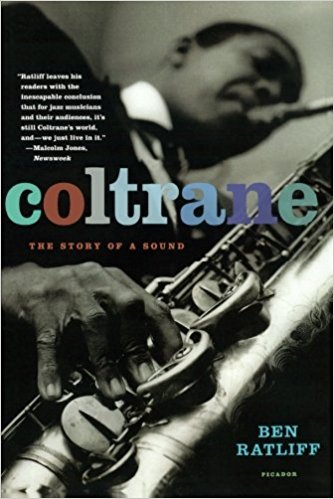
  • Coltrane: The Story of a Sound by Ben Ratliff: Written by the jazz critic of the New York Times. Focusing solely on Coltrane's life and more on his impact on jazz music. He has well depicted what is Coltrane sound, how he became who he is and his achievements. Probably the best book about the great Trane.

  • Norman Granz: The Man Who Used Jazz for Justice by Tad Hershorn: Norman Granz was the founder of Verve Records and an American jazz impresario. He is well known for his actions fighting inequality against African-American artists and trying to bring jazz to audiences all around the world. It is a portrait of a true jazz giant, maybe the most significant non-musician in jazz.

  • The Penguin Guide to Jazz Recordings by Richard Cook and Brian Morton: The reference for all the jazz recordings in history. Essential guide to recorded jazz. You can find all the jazz albums made till the date of publication (I have the 9th edition from 2008 and I did not see a more recent volume, please comment below if you come across an updated one).

  • JazzLife by William Claxton and Joachim Berendt: The best visual collection of jazz photographs reflecting legends and street musicians all over America.

Yes, a lot of reading but I assure you that these books helped me enormously to further appreciate and enjoy jazz. Hope they will be of the same use to you...

Pages from JazzLife with the music of John Zorn "The Sicilian Clan"


Thursday, January 4, 2018

A Book Review: The Sun & The Moon & The Rolling Stones by Rich Cohen

The first post of the year is about a book I read during the New Year holiday period. I might say it is one of the best books written about the Stones (that I've read of course), well maybe not as good as Keith Richards' "Life" but still a very entertaining book. It is well written and interesting because it is not a biographical book per se but a very good source to understand Rock'n'Roll and the era under the shining glamour of the Rolling Stones.


You might have heard the name of the writer, Rich Cohen, who was one of the co-creators of the HBO series "Vinyl" along with Martin Scorsese, Mick Jagger and Terence Winter. The show was staged in the 70s and revived the US musical scene from the eyes of a record executive.
He is also a contributing editor at Vanity Fair and Rolling Stone magazines.


English Version (Spiegel & Grau)


Turkish Translation (Domingo)


The writer had the opportunity to tour and travel with the band in the 90's for the Rolling Stone magazine (he was in his mid 20's by then). Therefore the reader can easily understand that he has gotten really close with the band members. I can say that this book is not a biography of the band neither gives any new information about the band. However Rich Cohen's research, stories/observations about the Rock world and the musicians he mentions in the book are quite marvelous. For me it was a book that I could not put down.

Cohen takes the reader through the Stone’s amazing history, professional highs and lows, specific albums that were of significance, personal struggles, especially those of Keith Richards, who was center stage in Cohen's mind, stealing the spotlight away from Mick Jagger. I think he believes it is Keith Richards who really reflects the soul of the band...


The fascinating thing about the book is that the writer does not tell the reader "what happened", but "how and why all those events happened".
The book also pays tribute to the ex-members of the band, especially Brian Jones and all the musicians that had an impact on the Stones' musical development such as Muddy Waters and Robert Johnson.
You can also find the "Beatles vs. Rolling Stones" comparison all over the book with their main differences based on the characteristics of both bands. All the insights why music, especially Rock'n'Roll, was so different in those years and what made those bands so great and timeless, are clearly explained by Rich Cohen.

Rolling Stones "Sympathy for the Devil"
Footage from the infamous Altamont, CA concert

So as a conclusion, for anyone who loves the Stones – read it. For music aficionados who are curious about the music and the world of the 60's and onward, give it a try. And for those who simply want to read fascinating revelations about one of the very best bands ever, this is for you, too.